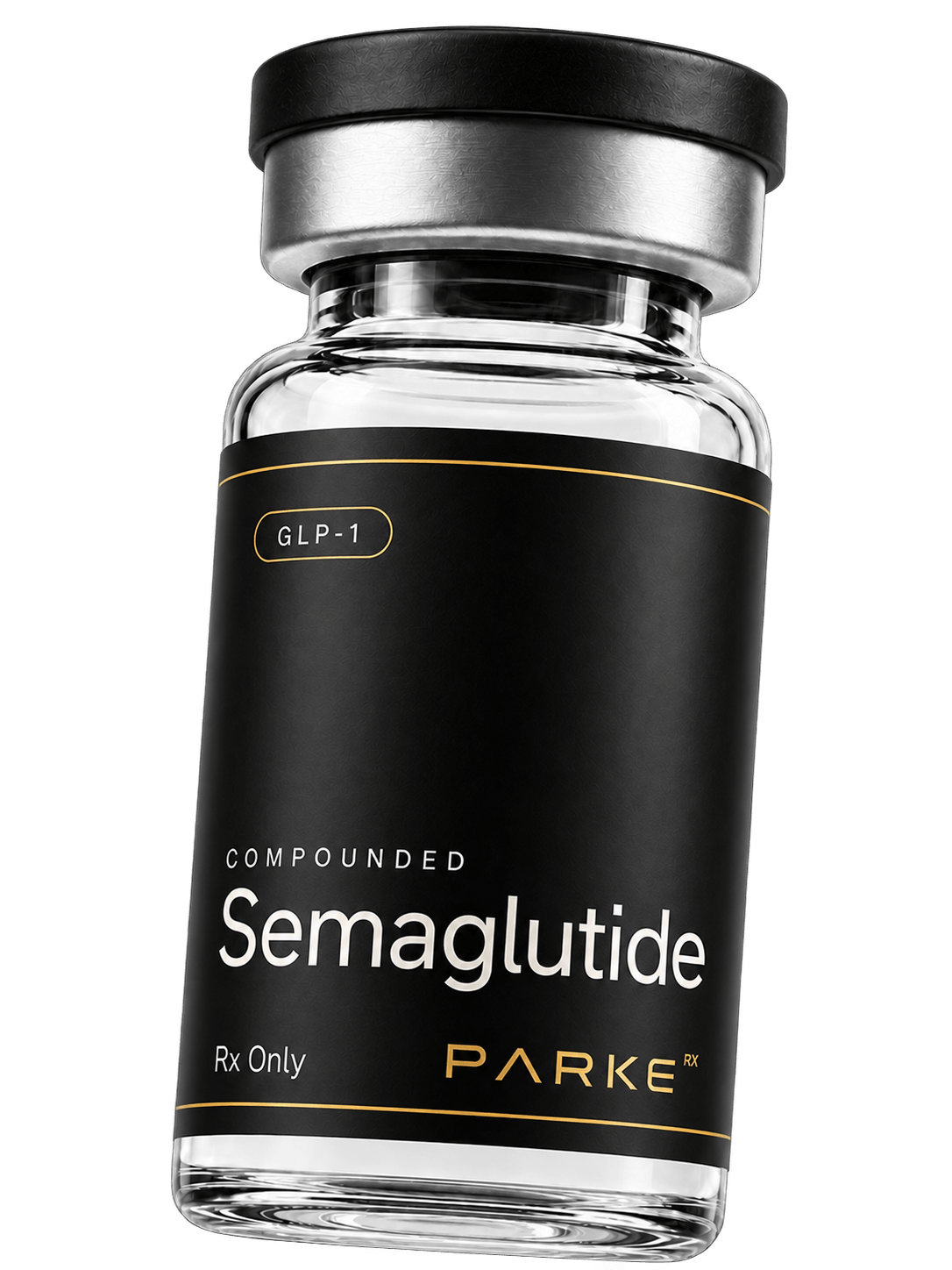
- This is a subcutaneous injection: a very short, very fine needle into the fatty layer just under the skin, not into muscle or a vein.
- Three site options: the abdomen at least two inches from the navel, the front or outer thigh, or the back of the upper arm.
- Rotate to a different spot each week. Repeated injections in the same place can change the tissue there and affect how the medication absorbs.
- Store unopened medication in the refrigerator at 36 to 46 degrees Fahrenheit. Never use medication that has been frozen.
- Pick one day of the week and keep it. If you miss a dose, message your clinician; do not double up.
- Your first injection comes with backup: your clinician and care team are a portal message away, usually answering within a day.
First, the reassurance
Let us start with the part your nerves actually care about. This is a subcutaneous injection, which means the needle goes into the layer of fat just beneath the skin. Not into muscle. Not into a vein. The needle built for that job is very short and very fine, closer to an acupuncture needle than to anything from a childhood vaccine memory, and the fatty layer it enters has relatively few nerve endings.
Most members tell us the same thing after their first week: the anticipation was the whole event. The injection itself took a few seconds and registered as a small pinch, or as nothing at all. We are not going to promise you will feel nothing, because honesty is the house style. We will say that the fear-to-reality ratio on this particular task is about as lopsided as it gets in medicine.
One more framing note before the practical part. You do not have to be good at this tonight. You have to be adequate at it once, with clean hands and a clean site, and you will be. By week four it will take you ninety seconds and you will wonder what the ceremony was about.
Supplies and setup
Set out everything before you start, so nothing interrupts you mid-task. You want a clean, well-lit surface, the medication itself, an alcohol swab or two, the syringe or injection supplies that shipped with your treatment, a sharps container, and something unhurried on in the background if that helps you.
Wash your hands with soap and water and dry them well. This is the single highest-value step in the whole process, and it costs twenty seconds.
If your medication lives in the refrigerator, take it out ahead of time and let it come toward room temperature before you inject. Cold medication is safe to inject, but it is noticeably less comfortable, and comfort is worth protecting on night one. Do not speed this up with warm water or a microwave. Room air and a little patience are the method.
The sharps container deserves its own sentence. Used needles go into an FDA-cleared sharps container or a heavy plastic household container with a tight lid, immediately after use, every time. Never into the trash, never recapped and left on the counter, never into recycling. If you did not order a sharps container with your first shipment, a rigid laundry-detergent bottle with a screw lid is an accepted stand-in while you get one.
Choosing your site
You have three regions to choose from, and all three work. The most popular is the abdomen: anywhere in the band of soft tissue around your middle, keeping at least two inches away from your navel in every direction. The second is the thigh: the front or outer part, where you can pinch an inch of tissue. The third is the back of the upper arm, which is easier with another person's help, since reaching it alone is awkward.
Wherever you choose, the spot should be unremarkable. Do not inject into skin that is tender, bruised, red, hard, or scarred. If the site you planned on looks angry for any reason, slide a couple of inches over or pick a different region entirely.
There is no prize for toughness here. Pick the region that is easiest for you to see and reach with relaxed hands. For most people injecting themselves, that is the abdomen, which is also the easiest place to pinch a proper fold of skin.
Why you rotate
Each week, move to a different spot. You can stay in the same region, abdomen to abdomen is fine, but shift a couple of inches from last week's location, and give any single spot a few weeks off before returning to it.
The reason is not superstition. Injecting repeatedly into the exact same site can cause changes in the tissue under the skin, small firm or thickened areas that you may feel before you see. Medication injected into changed tissue may not absorb the way it should, which quietly undermines the consistency your protocol depends on. Rotation is how you keep every dose landing in healthy tissue that absorbs predictably.
The simplest system is a clock face around your navel: this week at three o'clock, next week at six, and so on, always keeping that two-inch buffer. Some members note the spot in their phone alongside the weekly reminder. Whatever you use, the goal is the same: never the exact same spot twice in a row.
“Nobody is graded on their first injection. You need clean hands, a clean site, and thirty calm seconds. Every week after that gets easier, and by the fourth one it is just part of the evening.”
Dr. Marcus Okafor, MD
The seven steps
Read these through once before you begin, then follow them in order. They assume the supplies that shipped with your treatment; if the printed instructions in your shipment differ from anything here, the printed instructions win.
1. Clean. Wash and dry your hands. Wipe the chosen site with an alcohol swab and let it air-dry completely. Injecting through wet alcohol is what causes most of the sting people report, so give it the extra ten seconds.
2. Prepare the dose. Draw up or dial the dose exactly as your instructions describe, and check it once against your treatment plan. If anything about the medication looks wrong, discolored, cloudy when it should be clear, or containing particles, stop and message your care team instead of injecting.
3. Pinch. With your free hand, gently pinch a fold of skin at the site. You are lifting the fatty layer away from the muscle underneath, which is exactly where this medication belongs.
4. Insert at 90 degrees. Hold the syringe like a pen and insert the needle straight in, perpendicular to the skin, with one smooth motion. Slow needle entry is the painful kind. Deliberate and brisk is the comfortable kind.
5. Push steadily. Press the plunger down slowly and evenly until the full dose is delivered. There is no rush. A steady push over a few seconds is more comfortable than a fast one.
6. Count, then withdraw. Keep the needle in place for a slow count of five or six after the plunger stops. This gives the dose a moment to settle and keeps it from tracking back out. Then release the pinch and withdraw the needle straight out at the same angle it went in.
7. Dispose. The needle goes directly into the sharps container, uncapped, the moment it leaves your skin. If a drop of blood appears at the site, press briefly with a clean tissue. Do not rub the site. You are done.
That is the entire event. Most of it is preparation, and the needle is in your skin for less time than it took to read step four.
Storage, done right
Before first use, your medication belongs in the refrigerator at 36 to 46 degrees Fahrenheit, which is the range an ordinary home refrigerator holds. Keep it in its carton, away from the freezer compartment and away from the door shelf if your door runs warm.
After first use, follow the label on your specific medication for how it should be stored and how long it stays usable, because those instructions vary by product and they are the authority. When in doubt, the answer is printed on the carton or a portal message away.
Two absolute rules sit on top of everything else. Never use medication that has been frozen, even if it has since thawed and looks normal; freezing can damage it in ways you cannot see. And never use medication past the date on its label. If either happens, message your care team about a replacement rather than gambling on a dose.
Timing and missed doses
This is a once-weekly rhythm, and the easiest way to keep it is to give the injection a fixed appointment: same day, roughly the same time, ideally attached to something you already do. Sunday evening after dinner is a popular choice for a practical reason: if early side effects visit, they visit on your schedule rather than in the middle of a workweek. Set a recurring reminder and let the calendar do the remembering.
If you miss your day, do not improvise. The right move depends on how long it has been and where you are in your protocol, and that is a question for your clinician, not for arithmetic at your kitchen counter. Send a portal message, say when your last dose was, and you will get an answer for your specific situation. The one universal rule: never take two doses close together to make up for a missed one. Doubling up is how a manageable week becomes a miserable one.
What is normal afterward, and what is worth a message
A little redness at the site, a small bruise, or mild tenderness for a day or so are all ordinary and resolve on their own. Bruises happen to careful people; a tiny vessel near the surface is luck, not technique. None of this needs attention beyond noticing it.
Worth a message to your care team: redness that spreads or gets worse over a couple of days instead of better, a site that becomes hot, swollen, or increasingly painful, firm lumps that persist, or anything at the site that leaks or looks infected. Worth urgent, in-person care rather than a portal message: signs of a serious allergic reaction such as trouble breathing or swelling of the face, lips, or throat. That is rare, and it is also not a wait-for-a-reply situation; it is a 911 situation.
The honest summary: the overwhelmingly common experience after a first injection is a slightly anticlimactic evening. Notice what your body does over the first day or two, write down anything you want to ask about, and send the questions in. That is what the care team is for.
You are not doing this alone
Every first shipment arrives with instructions, and behind the instructions sits a care team that has walked thousands of people through night one. If you want a second set of eyes before you start, message your clinician through the portal and ask. If something felt off during or after the injection, describe it. There are no silly questions in week one, and the questions you send are read by a clinician who knows your chart, usually within a day. That rhythm, and what happens on their side of the screen, is its own story: inside the 24-hour clinician review.
And if the dose itself is on your mind, why it starts low, when it steps up, what happens if a level does not agree with you, that conversation is exactly what your check-ins are designed for. Your protocol is adjustable, your clinician expects to adjust it, and the first injection is simply the first data point.
Lead Clinician at Parke. He has reviewed thousands of member intakes and first-week questions, and he reads the technique guidance on this page against the current product labels before every update.
- DailyMed (NIH): FDA-approved prescribing information for branded semaglutide injection, including storage at 36 to 46 degrees Fahrenheit, site selection, and site rotation.
- FDA: Safely Using Sharps (Needles and Syringes) at Home, at Work and on Travel, the disposal guidance summarized above.
This article is general education about injection technique and is not a substitute for the printed instructions that ship with your medication or for your clinician's guidance, both of which take precedence wherever they differ from anything here. Compounded medications are prepared by state-licensed US compounding pharmacies and are not FDA-approved or evaluated. All treatment and dosing decisions are made by a licensed clinician from your intake. If you experience signs of a serious allergic reaction, call 911. Review the important safety information on each treatment page.