

- Retatrutide is an investigational once-weekly peptide that works on three hormone receptors at once: GLP-1, GIP, and glucagon.
- Early-phase trial results were striking, which is why your feed is full of it. Early-phase is not approval.
- It is not FDA approved, which means no clinician, telehealth or otherwise, can legally prescribe it today.
- Q1 2027: Lilly says it plans to submit retatrutide to the FDA for approval.
- There is no settled legal compounding pathway for it, so vials sold online or at the gym come without the oversight that makes prescribed medicine accountable.
- Parke does not sell, source, or prescribe retatrutide. If it earns approval, we will evaluate it the way we evaluate everything.
Available Today From Parke
The two GLP-1 medications Parke clinicians do prescribe, inside the legal framework this article describes.
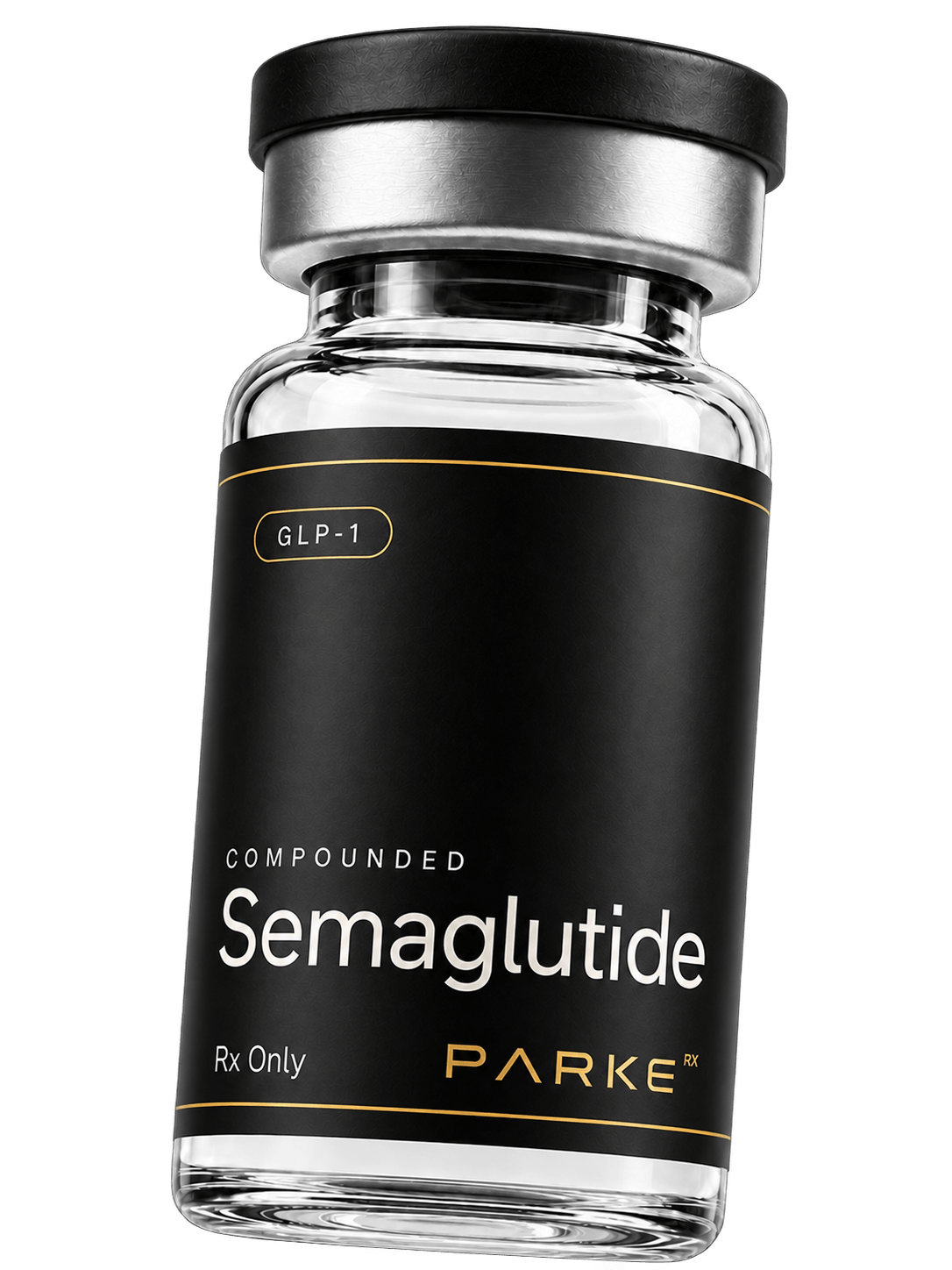 Semaglutide GLP-1
The proven starting point.
From$133/mo
Explore
Semaglutide GLP-1
The proven starting point.
From$133/mo
Explore
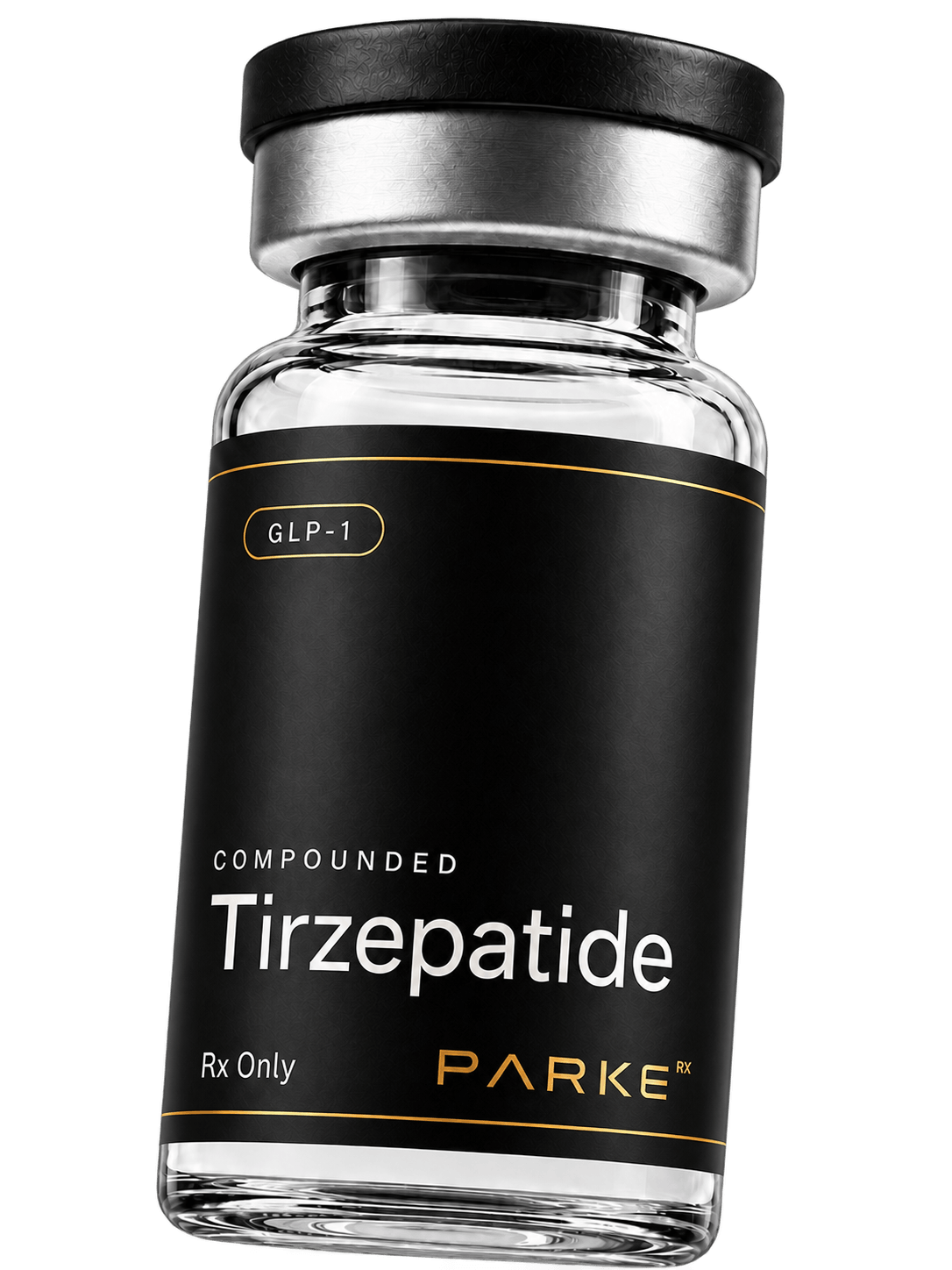 Tirzepatide GLP-1 + GIP
The stronger dual-pathway option.
From$249/mo
Explore
Tirzepatide GLP-1 + GIP
The stronger dual-pathway option.
From$249/mo
Explore
What retatrutide actually is
Retatrutide is an investigational medication being developed by a major pharmaceutical manufacturer: a once-weekly injectable peptide, in the same broad family as semaglutide and tirzepatide, but with a wider mechanism. Where semaglutide works on one hormone receptor, GLP-1, and tirzepatide works on two, GLP-1 and GIP, retatrutide is designed to work on three: GLP-1, GIP, and the glucagon receptor. You will see it called a triple agonist, or casually, triple G.
The third pathway is the interesting part. Glucagon receptor activity is associated with increased energy expenditure, which in plain terms means the drug is designed not only to quiet appetite, the way GLP-1 medications do, but to nudge the body toward burning more as well. Whether that design translates into approved medicine is exactly what the trials are for.
Why everyone is talking about it
In a mid-stage clinical trial published in a major medical journal, participants on the higher doses lost, on average, an amount of body weight that exceeded what earlier medications achieved in their own trials, and the curves had not fully flattened when the trial ended. Those results are the entire reason your feed, your gym, and your group chats know this word. They are genuinely notable.
They are also mid-stage results: a smaller group of people, a limited duration, and exactly the kind of data that exists to justify the larger, longer, stricter trials that decide whether a drug is actually approvable. Medicine's history is full of phase-two excitement that phase three complicated. That is not cynicism about retatrutide. It is the reason the process exists.
Where it actually stands
Retatrutide has moved through its large late-stage trials, with the main obesity studies now complete and the program in the regulatory endgame; there is even a pre-approval expanded-access record on file, which is itself confirmation of the key fact: as of this writing, it is not approved. Until the FDA finishes its review of the full evidence on effectiveness and safety, it remains an investigational compound. Not a product, not a prescription option, not a menu item anywhere, including here.
Why no one can prescribe it, including us
Two separate doors are closed, and both matter. The first is approval: prescribing in the United States runs on FDA approval, and an investigational drug cannot be prescribed outside its trials. This is not a telehealth technicality. It binds every clinician in every setting equally.
The second door is compounding, and it deserves a clearer explanation than it usually gets, because compounding is not a gray area. It is a longstanding, legal part of American pharmacy, written directly into federal law, and state-licensed 503A pharmacies prepare medications under it every day. The law defines exactly when: pharmacies may compound using ingredients that are components of FDA-approved drugs. When the FDA places an approved medication on its official drug shortage list, pharmacies are expressly permitted to prepare it so patients are not stranded, which is precisely how compounded semaglutide and tirzepatide first reached so many people. And clinicians may prescribe compounded preparations tailored to an individual patient's needs. Different doors, one shared hinge: an FDA-approved medication at the center.
Retatrutide is not through the first gate. With no approved version, there is nothing to be in shortage, nothing to personalize, and no approved ingredient basis to compound from. The framework that makes compounded semaglutide and tirzepatide legitimate does not exclude retatrutide by judgment; it simply cannot reach a drug that does not officially exist yet. Which is why sales of it have already drawn lawsuits and regulatory letters, and why, until approval lands, there is no route to it that a clinician can responsibly stand behind.
What is actually in the vials online
So what is everyone on TikTok injecting? Much of it is product sold by websites and gym channels labeled for research use only, a label that exists precisely because selling it for human use would be illegal. No clinician screened the buyer, set a dose, or is watching for problems. The label states a strength; nothing independent verifies it. The vial says retatrutide; the buyer is taking that on faith.
We are candid on this site that compounded medications are not FDA approved. But compounded medication from a licensed 503A pharmacy sits inside a real regulatory system: state licensure, pharmacist accountability, a prescription from a clinician who answers for it. Gray-market peptide vials sit inside nothing. Prevalence is not legality, and popularity is not safety. A thing can be everywhere and still be a bad idea.
“The most promising drug in development is still less useful to you than a proven drug you can actually get, legally, with a clinician attached.”
Dr. Priya Shah, MD · Endocrinology
What to do with this interest, today
If retatrutide caught your attention, what caught it was probably the underlying idea: medication that works on your body's own appetite and energy signaling, seriously and measurably. That idea is not waiting on a trial. It exists now, in approved form as branded semaglutide and tirzepatide and, where appropriate, as compounded preparations prescribed by licensed clinicians and prepared by licensed pharmacies. Dual-pathway tirzepatide in particular covers two of retatrutide's three mechanisms, legally, today, with a clinician reviewing every step.
Whether any of that is right for you is your clinician's call from your intake, not this article's. The point is narrower: the legitimate version of what you are looking for already exists, and it does not ship from a website with a research-use disclaimer.
What would have to happen before Parke offered it
In order: the late-stage trials complete. The FDA reviews the evidence and approves it. A legal prescribing pathway exists. And then our clinical team evaluates it the way we evaluate everything, on evidence, safety, and fit for the members we serve. We watch this space closely and we would like nothing more than for the science to hold up. But hope is not a prescription pad. Until every one of those steps is done, our answer on retatrutide is the only honest one available: not yet, from anyone, and be suspicious of whoever says otherwise.
The bottom line
Retatrutide is a genuinely promising investigational medicine and a genuinely illegal purchase, at the same time, and both halves of that sentence matter. The excitement is earned; the vials for sale are not. If the trials succeed and approval comes, the legitimate system, clinicians, licensed pharmacies, real oversight, will carry it, and we expect to be part of that. Until then, the considered move is the boring one: treat the hype as a preview, not a product, and build your actual plan on medicine that exists.
Endocrinologist at Parke, focused on the hormonal machinery of appetite and metabolism. She reviews the science claims in this journal alongside the medical director.
- Jastreboff AM, et al. Triple-hormone-receptor agonist retatrutide for obesity, a phase 2 trial. New England Journal of Medicine. 2023. doi:10.1056/NEJMoa2301972 · NCT04881760
- TRIUMPH-1, retatrutide in obesity or overweight, phase 3. NCT05929066
- TRIUMPH-3, retatrutide in obesity with cardiovascular disease, phase 3. NCT05882045
- TRIUMPH-Outcomes, cardiovascular and kidney outcomes, phase 3. NCT06383390
- All registered retatrutide studies. ClinicalTrials.gov
- FDA: Human drug compounding under section 503A, bulk drug substance requirements.
This article is for general information and education about an investigational compound. It is not medical advice, and nothing here is an offer, promotion, or endorsement of retatrutide, which is not FDA approved, has no established safety and effectiveness profile, and cannot legally be prescribed, compounded, or sold for human use in the United States. Parke does not sell, source, or prescribe retatrutide. Trial results referenced are from early-phase studies of the investigational product and do not predict approval, availability, or individual outcomes. Statements about future availability are aspirational, contingent entirely on regulatory approval, and not a commitment. Review the important safety information on each treatment page for the medications Parke does prescribe.