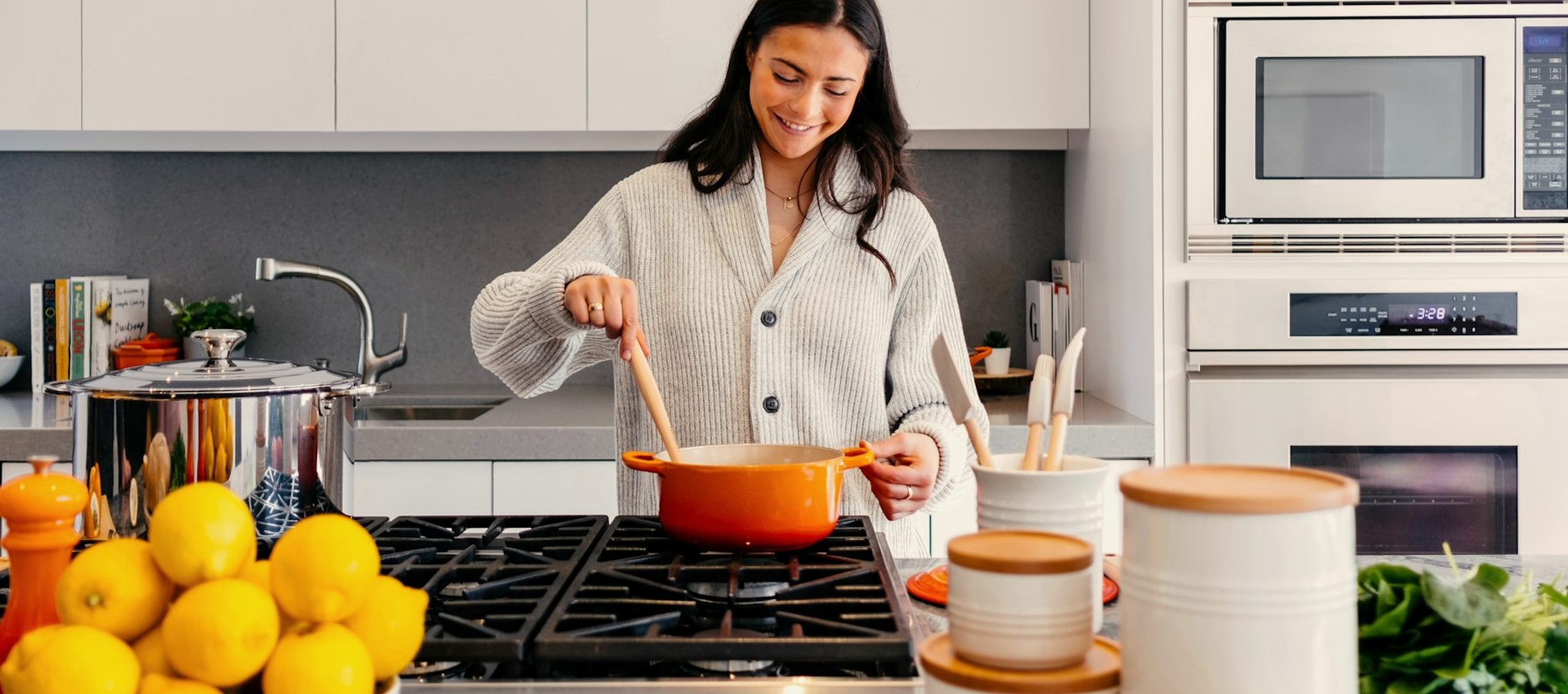
- No food is banned on a GLP-1. The medication changes how foods feel, and that feedback is more specific than any list a stranger could write for you.
- Rich, fried, and heavy-fat meals tend to linger in a slowed stomach. Oversized portions and very sugary drinks are the other usual offenders.
- Protein goes first on the plate, fiber close behind. A smaller appetite means every bite carries more nutritional weight.
- Hydration slips quietly, because thirst cues fade along with hunger cues. Treat water as a discipline, not a preference.
- Parke does not sell meal plans, on purpose. Your clinician adjusts the treatment. The plate stays yours.
The honest premise
Most diet advice starts from scarcity: here is what you must give up, and here is the willpower you will need to give it up. GLP-1 treatment starts from somewhere else entirely. The medication itself reduces appetite and slows how quickly the stomach empties, which means the usual struggle, wanting more than you should have, largely dissolves. What replaces it is a different and much less discussed problem: wanting less than your body needs, and having to spend a small appetite wisely.
That is why this guide contains no forbidden-foods list. Not because everything is equally good for you, but because the medication gives you feedback more precise than any list. A meal that once felt normal may now feel like too much. A food you used to crave may simply stop calling. Members tell us this constantly, and it tracks with the mechanism: the treatment quiets the reward loop around food, the phenomenon we cover in the food noise article. You do not need rules to avoid what your body now politely declines.
So the honest premise is this. Nothing is banned. Some things will sit badly, and you will learn which ones quickly. Some things will serve you far better than others, and those deserve first claim on a smaller appetite. The rest of this guide is just those two lists, written as tendencies rather than commandments, because your version of them will be your own.
What tends to sit badly, and why
The common thread is the slowed stomach. GLP-1 medications delay gastric emptying, which is part of how they keep you full. It also means that foods which take effort to digest now take longer, and you feel that time.
Rich, fried, and heavy-fat meals. Fat is the slowest macronutrient to leave the stomach even without medication. Add a GLP-1 and a plate of fried food or a cream-heavy dish can sit for hours, which members typically describe as a heaviness that curdles into queasiness. Most people do not swear off these foods. They shrink them: a few fries from someone else's plate instead of a basket, a lighter preparation of the same dish.
Large portions. The portion your eyes learned before treatment is usually bigger than the portion your stomach now wants. Pushing past the new fullness signal is the most reliable way to feel awful on a GLP-1, and restaurant servings practically invite it. Stopping at satisfied, rather than finished, is the single highest-yield habit in this entire article.
Very sugary drinks. A large sweetened coffee drink or a soda delivers a lot of sugar into a slowed system, and many members report it lands badly: a wave of nausea, sometimes a slump afterward. Liquid sugar also spends precious appetite on nothing, which matters more below.
Carbonation and heavy spice, for some people. These are the individual ones. Carbonated drinks add volume to a stomach that already empties slowly, and some members find fizz uncomfortable where it never was before. Very spicy food bothers some and not others. Test gently and trust your own results.
What tends to work
Protein, first on the plate. If this guide kept only one rule, this is it. Appetite shrinks; the body's requirements do not, and protein is the requirement that protects muscle while weight comes off. Eat the protein portion of any meal first, while appetite is freshest. The full case, with the numbers and the food lists, is in our protein guide, and it is the natural companion to this article.
Fiber and produce. Vegetables, fruit, beans, and whole grains do quiet, essential work: they keep digestion moving, which matters on a medication that slows it, and they carry the vitamins and minerals a smaller diet can otherwise run short on. Constipation is one of the more common complaints on GLP-1s, and fiber plus fluids is the everyday answer to it.
Water-rich foods. Soups, stews, fruit, yogurt. They hydrate while they feed, they tend to sit gently, and on days when appetite is very low they are often what still sounds good. A brothy soup with something substantial in it is close to an ideal GLP-1 meal: fluid, protein, and vegetables in one bowl that asks little of a slow stomach.
Smaller plates, more often. Three large meals is a convention, not a law. Many members do better with smaller meals and a purposeful snack or two, because modest amounts of food, arriving at a measured pace, suit a slowed stomach far better than occasional big deliveries. If dinner keeps defeating you, make it smaller and add something mid-afternoon.
A smaller appetite makes every bite count
Here is the arithmetic that changes everything about eating on a GLP-1. Before treatment, most people eat enough total food that nutritional gaps fill themselves by accident. On treatment, total volume drops substantially, but the body's requirements for protein, fiber, vitamins, and minerals stay right where they were. The same nutrition now has to arrive in fewer bites.
That flips the old dieting logic on its head. Traditional dieting is about restriction: which foods can I exclude? Eating well on a GLP-1 is about selection: with this smaller appetite, what earns a place? A pastry is not forbidden. It simply spends a meaningful share of a small budget on something that does no work for you, and you will feel that trade in energy, digestion, or muscle over time. Quality over volume is not a slogan here. It is the actual math of the situation.
The practical move is to build every meal around the working foods first, protein and produce, and let the purely fun foods have whatever room is honestly left. Most days, some room is left. That is what no forbidden foods means in practice: dessert is fine, and it goes last.
Hydration is its own discipline
This one deserves its own section because it fails silently. Much of daily hydration normally arrives with food and with the drinks that accompany eating. Eat notably less and you drink notably less, without ever deciding to. On top of that, the same quieting of appetite signals seems to mute thirst for many members: the body simply asks less often.
Dehydration on a GLP-1 masquerades as other problems. It reads as fatigue, as headache, as lightheadedness, as worse nausea, and it aggravates constipation, so members often blame the medication for what is actually an empty water bottle. The fix is unglamorous: stop treating thirst as the trigger and make water a scheduled habit. A full glass with each meal and snack, a bottle that travels with you, water first thing in the morning. If you are having a rough stomach day, fluids matter twice as much, and small frequent sips beat heroic chugging.
An unfussy day of eating
Not a meal plan. Just what a reasonable day often looks like for a member a few months into treatment, written so you can see the shape rather than copy the menu.
Morning opens with water before anything else, then a breakfast built on protein rather than pastry: eggs, or Greek yogurt with berries, or leftovers from last night if that is what sounds good, because breakfast foods are a convention too. It is smaller than the breakfast of a year ago and that is fine. Midday is a modest lunch, protein and vegetables in some easy form, a grain bowl, a hearty soup, a sandwich with real filling, eaten slowly enough to hear the fullness signal arrive. Mid-afternoon, if the day is long, a purposeful snack: cheese, fruit and nuts, cottage cheese, a protein shake on the days when solid food has no appeal. Dinner is the same idea at the same modest scale, protein first, vegetables alongside, starch in a supporting role, stopping at satisfied rather than at clean-plate. Water rides along with all of it. Some evenings there is dessert, a small one, enjoyed without a philosophical crisis.
Notice what the day is not. It is not six hundred calories of juice and virtue. Eating too little is a real failure mode on these medications, and it shows up as exhaustion, hair shedding, and lost muscle. If food keeps sliding to the bottom of the day's agenda, treat meals like appointments until the habit returns.
“The medication shrinks the appetite. It does not shrink the body's requirements. The whole craft of eating on a GLP-1 lives in that gap.”
Lena Ortiz, RD
Restaurants and social meals
Eating out on a GLP-1 is mostly a portion problem wearing a social costume. Restaurant servings are built for pre-treatment appetites, and the table has expectations: shared starters, finish your plate, another round. None of it requires a speech about your treatment.
The quiet tactics work. Read the menu for the protein-forward dish rather than the fried one, not out of piety but because you know how each will feel at 10pm. Consider a starter as your main, or say the entree portion is generous and ask for a box up front, which turns one dinner into two. Eat slowly; the fullness signal on a GLP-1 arrives with authority, and pace is how you hear it before you pass it. And let go of clean-plate guilt entirely. Leaving food is not rudeness or waste of character. It is the correct response to a portion sized for someone you no longer are.
Social meals are also where food pressure lives: the host who made it specially, the friend who notices you are eating less. A simple “it was great, I am full” is complete. You owe the table good company, not a demonstration of appetite.
The side-effect connection
Food choices and side effects are the same conversation on a GLP-1, especially in the early weeks and after each dose increase, which is when nausea and digestive complaints cluster. Nearly every food tendency in this guide doubles as side-effect management: smaller meals sit better than large ones, lower-fat preparations beat fried ones, fluids blunt nausea and fight constipation, fiber keeps things moving, and eating slowly keeps you from overshooting fullness. On a queasy day, drop back to the foods that ask nothing of you, plain, bland, small, and hydrate; appetite generally returns as the body adjusts.
Side effects deserve their own full article, and they have one: our guide to what is common, what passes, and what to report. The short version for this page: food is your first and gentlest lever, and your clinician is the second. If eating adjustments are not enough, that is exactly what dose adjustments and messaging your care team are for.
Why we do not sell meal plans
Plenty of programs would happily sell you a laminated week of meals to go with your treatment. Parke does not, and the reason is the premise this article opened with. A meal plan written by someone who has never met you has to guess at your appetite, your schedule, your kitchen, your culture, and your tastes, and it goes stale the first week your appetite shifts, which on a titrating medication is often. What actually holds up is a small set of priorities, protein first, fiber and fluids, modest portions, quality over volume, applied to the food you already know and like.
The division of labor at Parke is deliberate. Your clinician manages the treatment: the dose, the schedule, the adjustments when something is not sitting right, with unlimited messaging in between. The plate stays yours, guided by the priorities above and by feedback from a body that has become, courtesy of the medication, unusually clear about what it wants. That is not us withholding a service. That is the service: treatment that adapts to your life instead of a menu your life must adapt to.
Eat the foods you like, in the smaller amounts you now want, with the working foods first. That is the entire diet plan, and it is the only one that survives contact with an actual life.
Medical Director at Parke. Board-certified in internal medicine, with a decade of clinical practice focused on metabolic health. She reviews every clinical claim in this journal before it publishes. Guest columns reflect the views of their credited authors.
- Nutritional priorities to support GLP-1 therapy for obesity: a 2025 joint advisory from the American College of Lifestyle Medicine, the American Society for Nutrition, the Obesity Medicine Association, and The Obesity Society. American Journal of Clinical Nutrition.
- Full text of the same advisory via PubMed Central, including its guidance on protein, fiber, fluids, and managing food tolerance during treatment.
This article is general nutrition information, not medical advice, and it is not a prescribed diet. Food tolerance on GLP-1 treatment varies by person and by dose; your clinician's guidance for your situation comes first. Compounded medications are prepared by state-licensed US compounding pharmacies and are not FDA-approved or evaluated; treatment decisions are made by a licensed clinician from your intake. Review the important safety information on each treatment page.